Blog

Black flannel pyjama bottoms

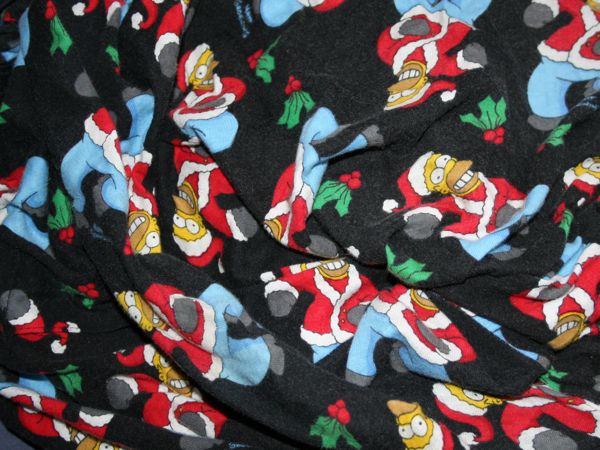
James isn’t normally the pyjama sort, but it’s been particularly cold this winter and he’s been in need of some PJ bottoms for quite a while. He only has one pair and it’s kinda sad to be wearing Santa Homer Simpson in February:

(Note to family – please don’t take this as a plea to send more. He really only needs and wants this one pair!)

So I took pity on him and said I’d sew him a new pair to wear, and Burda magazine 12-2010 #134 was particularly handy. There are tons and tons of unisex pyjama trouser patterns out there, but this one was easy to find, and I know Burda’s sizing is so consistent that a 52 would fit him fine.

We were going to use the grey knit fabric we bought at Ditto, but I greatly underestimated the width of that so there was nowhere near enough (totally my fault as Gill asked “are you sure that’s enough?”). In a sea of insipid cutsey prints, Chawla’s came through with this solid black cotton flannel for cheap (3m for £11 shipped and I’ve got extra for jacket interlining if I like now, too). Chawla’s may not have the widest selection of natural fibre fabrics, but they are consistently the fastest shippers ever – I ordered this on a Tuesday, and it arrived in Thursday’s post!

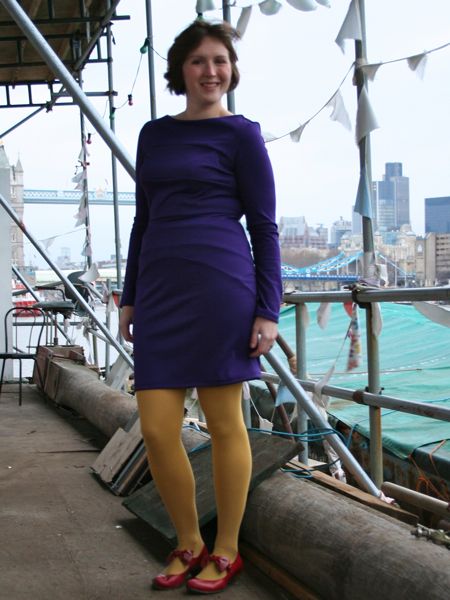
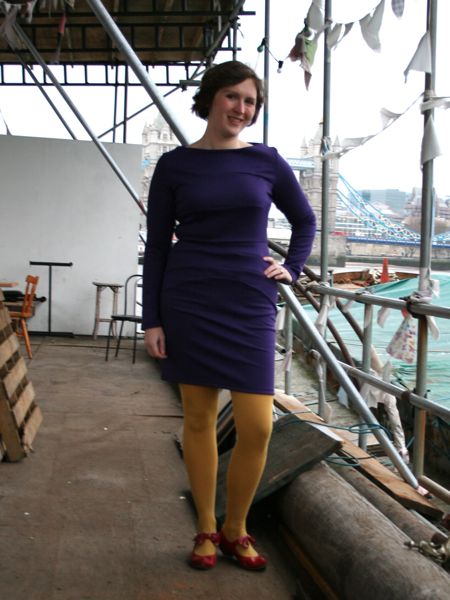
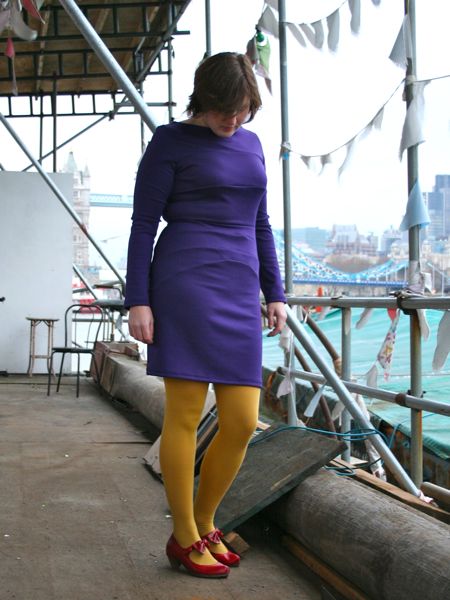
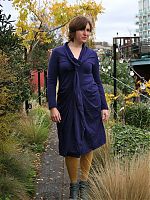
The Burda September cover dress (winter version)

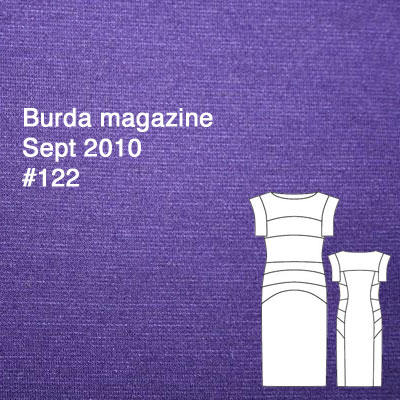
I made no secret of my total love and adoration of Burda’s September issue last year. In my opinion (and many of you!) this was the standout, stellar issue in an otherwise mediocre year for the magazine. I’m slowly working my way through everything I wanted to sew from that issue (some good and some bad!) but now it was the time for the cover dress, #122.

I showed you the pattern alterations I made to “un-petite” this pattern, though I reckon I could have even added a bit more to the middle of piece 2 as my pointiroma has less lengthwise stretch as my muslin knit, making the underbust seam just barely under my bust. The horizontal seam between pieces 3 and 4 hits me right at my natural waist on the sides, which I think is just great. I also took 6 inches off the hem of pieces 7 and 8 so that this is above the knee rather than below.

Un-petiting the Burda September cover dress

While I wait for the weekend to photoshoot the Lekala ribbed top (either you all are too smart or I’m too predictable!), I’ve started work on creating the cover dress from the September Burda magazine. It’s a really cool, curved seam design with no side seams and designed for knits, but it’s one of Burda’s Petite patterns.

I am in NO way petite – at 5’8” (172cm), I am closer to Burda’s Tall height (180cm) than I am to the petite height( (160cm). I have a sneaking suspicion that my torso is quite compact and my height is mostly in my legs, but in any case… I’ve made a few of Burda’s petite patterns before with good results, namely, my 30th birthday dress and the blue silk cocktail dress, so I wasn’t totally scared off because it’s for petites.

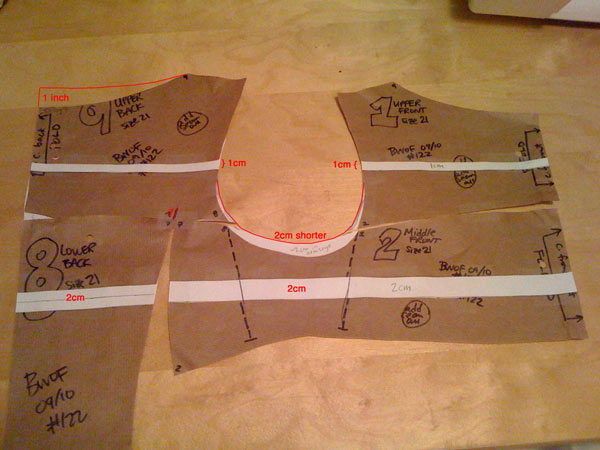
I made up a muslin of the top half of the dress (the half I’m most concerned with) on Wednesday night and I’m happy with my alterations so I thought I should share what I did.

First of all, lay out pieces 1 and 2 so that their folded edges are aligned, taping the pieces together loosely. Then lay out pieces 8 and 9 so that their folded edges are aligned, and that these meet the front pieces at intersections 7 and 8. Don’t worry that the shoulders are far apart or that some of the curved seams don’t meet up whilst flat.

My alterations are the white pieces shown below:

Post-coat winter sewing plans

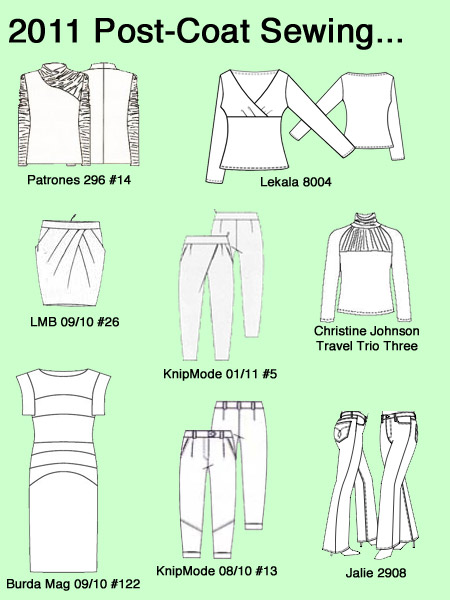
Now that I’ve got my big winter coat sewing out of the way, I can turn my attentions to filling in a few gaps in my winter wardrobe. Sewing these things now means I can get another good 3-4 months of wear out of them before moving on to short sleeves and lighter jackets (no really, for the past few years we’ve had flurries and hard frosts in April or May).

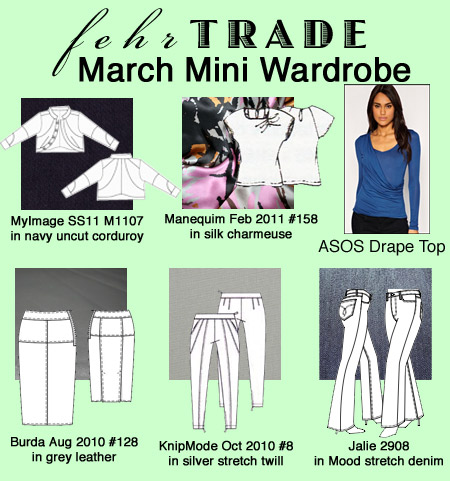
So I’ve gathered together the patterns I’d most like to sew along with fabrics I’ve got in my stash that would help fill my wardrobe voids…

Starting at the top of this collage, we’ve got:

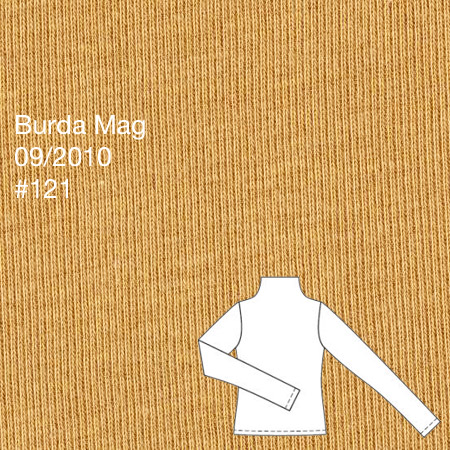
The Caramel turtleneck

“Oh”, I hear you think*, “another one of those Burda turtlenecks?!?!”

Endless others have already made this, and I admit I was hesitant to make it myself because:

  1. When a pattern gets made a LOT, it kinda makes me want to sew it less (maybe it’s shades of “I sew so I don’t wear the same thing as everyone else” coming through?)
  2. I love love loved the Burda September issue and it almost feels like a cop-out to make the super easy pattern from it first when there’s just so many great patterns in there

But in the end, I still really needed more long sleeved tops and I already had the fabric and the overlocker and coverstitch were still threaded in the right colours. So it’s fate.

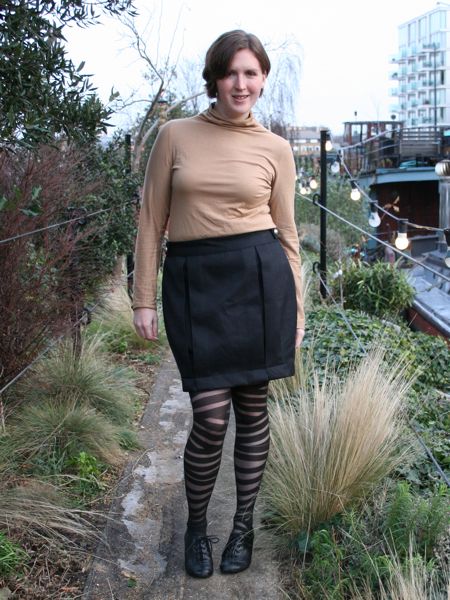
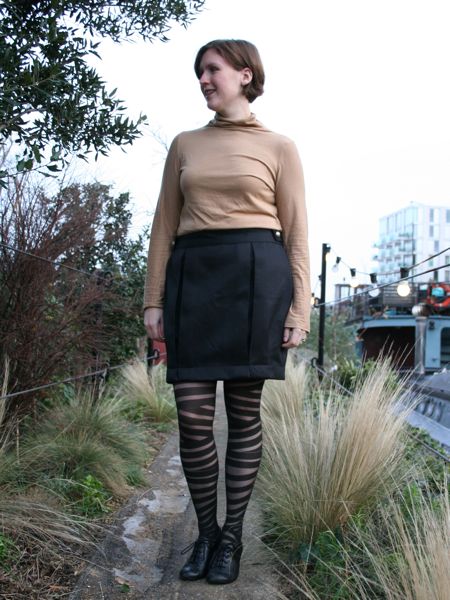
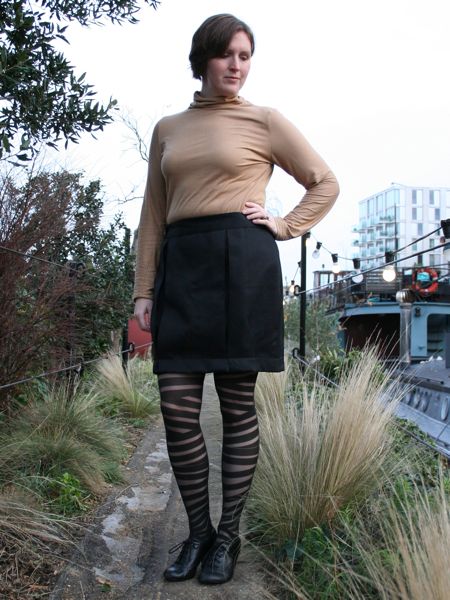
So here is my version of the Burda Sept 2010 turtleneck, in caramel-coloured bamboo jersey

Pre-Christmas prep

Are you ready for some random sewing goodness? Let the randomosity begin!

  • When I was at the bookstore on Brick Lane buying James’s birthday card, I couldn’t resist this reusable wrapping paper (okay, it’s just fabric to me and you!) with London streetsigns. I love that it’s a London fabric without being OMG UNION JACKS THE QUEEN TOWER BRIDGE! I figure I could use it as a lining like I did with that Japanese tea towel and my bolero jacket a few years back…

  • We were supposed to meet up with Pip and her boyfriend two weeks ago to celebrate Christmas, but we had to reschedule due to my swine flu, so I’m only just now able to sew up her present – a Nairobi bag made up in gorgeously soft red wine leather, bought in NYC from Global Leathers (I find it interesting that Americans would call this colour “burgundy”, whereas in the UK it’d be “claret”). I’m about halfway done and already I can tell she’s going to love it!

James's fantasy jacket

I’ve been calling this James’s “fantasy jacket” because he’s asked me to recreate a beloved unlined, simple, waterproof jacket that was stolen from a pub on the night he met me all those years ago.

He recalled it from memory while I attempted to create an accurate tech drawing, and then once that was agreed, I compared this against my vast pattern magazine archive (made much easier since I started tagging my At a Glance scans online, so I just had to shuffle through those issues tagged “menswear”!).

I decided that BWOF 10/08 #134 was a pretty good starting point for what James wanted, and I went from there. The muslin went well, so around Thanksgiving I started on the final jacket, made from a very cool laminated linen from Mood in NYC, with bias binding made from some dark red and black tie silk bought in Dublin three years ago.

The Best Pattern Magazines of 2010 – Nominations

I always look forward to Pattern Review’s Best Patterns of the year, but this year the nominations don’t have a single pattern magazine included. This is really disappointing as I do 99% of my sewing from them, and I feel the shortlist really doesn’t reflect my own personal sewing in the slightest. (And don’t even get me started about the inclusion of some patterns that were just Big 4’s stumbling, mediocre versions of great patterns previously printed in pattern mags!)

So I thought it might be fun to have our own nominations for the Best Pattern Magazines of 2010!

I think it’ll be easier to vote for whole issues rather than specific patterns inside, and also give people a better idea of which back issues to hunt for. If there’s enough nominations, I’ll set up a proper vote in a bit so we can see what’s crowned the winner when I do my own personal roundup of the year on New Year’s Day.

How to sew welt pockets

It may be FREEZING in London, but the heat is on for me to sew James’s fantasy jacket in time for his birthday on Saturday!

I’m calling it his “fantasy jacket” because he’s asked me to recreated a beloved unlined, simple, waterproof jacket that was stolen from a pub on the night he met me. So he recalled it from memory while I attempted to create an accurate tech drawing. Then I compared this against my vast pattern magazine archive and decided that BWOF 10/08 #134 minus all the bells and whistles plus a few different whistles and bells was the best starting point. The muslin went well, so this weekend I started on the final jacket, made from a very cool laminated linen from Mood in NYC, with bias binding made from some dark red and black tie silk bought in Dublin three years ago.

The rubberised coating on the fabric means any and all pin holes show, so I needed to treat it like leather – pattern weights and rotary cutter for the pieces, and since it’s unlined, I also needed to create metres upon metres of bias binding for the exposed edges. I used a continuous bias binding method for the first time ever and it was very quick, though not very intuitive.

(I wrapped the binding around a sunglasses case to avoid creases. And because it was handy. Let’s face it – I’m not going to be needing the sunglasses any time soon!)

After binding most of the edges, I then set to work on the front welt pockets, which were rather tricky on a fabric that requires a press cloth (I’m paranoid that the laminating will melt!) and can only be basted where it will never be seen. So I thought I’d document the process and give you all a little welt pocket tutorial.

This is also exactly how I do bound buttonholes, but because the scale is much larger here, it’s easier to try welt pockets first to get the technique down and then just do the same thing on a smaller scale for buttons once you get the hang of it.

How to sew a double welt pocket

My pockets here are 7 inches long (6” is standard but I wanted to make sure his big man paws would fit in), and the opening is a total of 2cm wide (1cm on either side of the centre opening line). So the welts I cut out were 4cm wide (folded in half, they’re 2cm wide so straddle the stitching line nicely), and 8 inches long (so I get some overlap at the ends). You’ll need two welts per pocket. I folded each of these lengthwise and machine basted close to the cut edges to keep them together. If your fabric frays or shifts in anyway, you may want to interface the welt pieces in addition to the area around the pocket opening.

Step 1
Hand baste the pocket edges and central line. When you’re basting (in general), never turn a corner with your hand stitches, but leave the tails free at the corners. Also, you should extend the short edges here two centimeters or so beyond the long lines. I haven’t here because the needle holes would show!