Blog

James's fantasy jacket

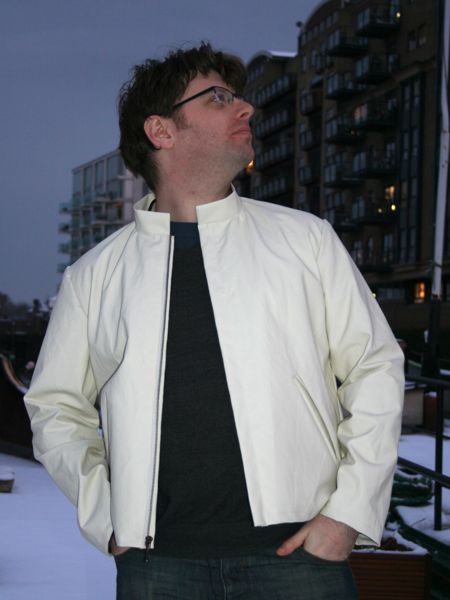
I’ve been calling this James’s “fantasy jacket” because he’s asked me to recreate a beloved unlined, simple, waterproof jacket that was stolen from a pub on the night he met me all those years ago.

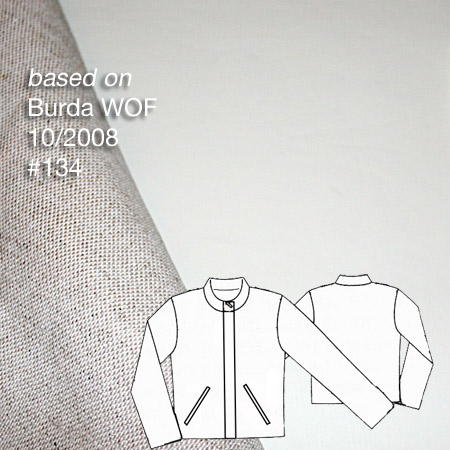
He recalled it from memory while I attempted to create an accurate tech drawing, and then once that was agreed, I compared this against my vast pattern magazine archive (made much easier since I started tagging my At a Glance scans online, so I just had to shuffle through those issues tagged “menswear”!).

I decided that BWOF 10/08 #134 was a pretty good starting point for what James wanted, and I went from there. The muslin went well, so around Thanksgiving I started on the final jacket, made from a very cool laminated linen from Mood in NYC, with bias binding made from some dark red and black tie silk bought in Dublin three years ago.

The Best Pattern Magazines of 2010 – Nominations

I always look forward to Pattern Review’s Best Patterns of the year, but this year the nominations don’t have a single pattern magazine included. This is really disappointing as I do 99% of my sewing from them, and I feel the shortlist really doesn’t reflect my own personal sewing in the slightest. (And don’t even get me started about the inclusion of some patterns that were just Big 4’s stumbling, mediocre versions of great patterns previously printed in pattern mags!)

So I thought it might be fun to have our own nominations for the Best Pattern Magazines of 2010!

I think it’ll be easier to vote for whole issues rather than specific patterns inside, and also give people a better idea of which back issues to hunt for. If there’s enough nominations, I’ll set up a proper vote in a bit so we can see what’s crowned the winner when I do my own personal roundup of the year on New Year’s Day.

How to sew welt pockets

It may be FREEZING in London, but the heat is on for me to sew James’s fantasy jacket in time for his birthday on Saturday!

I’m calling it his “fantasy jacket” because he’s asked me to recreated a beloved unlined, simple, waterproof jacket that was stolen from a pub on the night he met me. So he recalled it from memory while I attempted to create an accurate tech drawing. Then I compared this against my vast pattern magazine archive and decided that BWOF 10/08 #134 minus all the bells and whistles plus a few different whistles and bells was the best starting point. The muslin went well, so this weekend I started on the final jacket, made from a very cool laminated linen from Mood in NYC, with bias binding made from some dark red and black tie silk bought in Dublin three years ago.

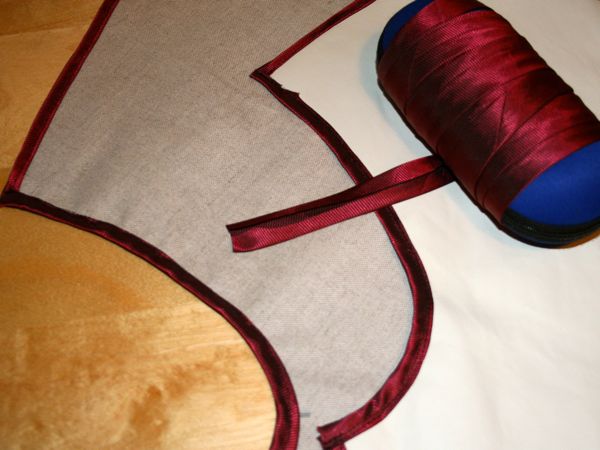
The rubberised coating on the fabric means any and all pin holes show, so I needed to treat it like leather – pattern weights and rotary cutter for the pieces, and since it’s unlined, I also needed to create metres upon metres of bias binding for the exposed edges. I used a continuous bias binding method for the first time ever and it was very quick, though not very intuitive.
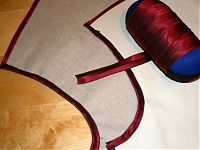
(I wrapped the binding around a sunglasses case to avoid creases. And because it was handy. Let’s face it – I’m not going to be needing the sunglasses any time soon!)

After binding most of the edges, I then set to work on the front welt pockets, which were rather tricky on a fabric that requires a press cloth (I’m paranoid that the laminating will melt!) and can only be basted where it will never be seen. So I thought I’d document the process and give you all a little welt pocket tutorial.

This is also exactly how I do bound buttonholes, but because the scale is much larger here, it’s easier to try welt pockets first to get the technique down and then just do the same thing on a smaller scale for buttons once you get the hang of it.

How to sew a double welt pocket

My pockets here are 7 inches long (6” is standard but I wanted to make sure his big man paws would fit in), and the opening is a total of 2cm wide (1cm on either side of the centre opening line). So the welts I cut out were 4cm wide (folded in half, they’re 2cm wide so straddle the stitching line nicely), and 8 inches long (so I get some overlap at the ends). You’ll need two welts per pocket. I folded each of these lengthwise and machine basted close to the cut edges to keep them together. If your fabric frays or shifts in anyway, you may want to interface the welt pieces in addition to the area around the pocket opening.

Step 1
Hand baste the pocket edges and central line. When you’re basting (in general), never turn a corner with your hand stitches, but leave the tails free at the corners. Also, you should extend the short edges here two centimeters or so beyond the long lines. I haven’t here because the needle holes would show!
Bronze leather obi belt

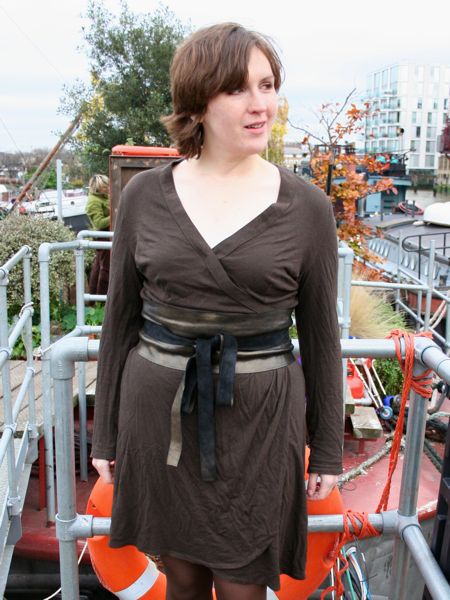
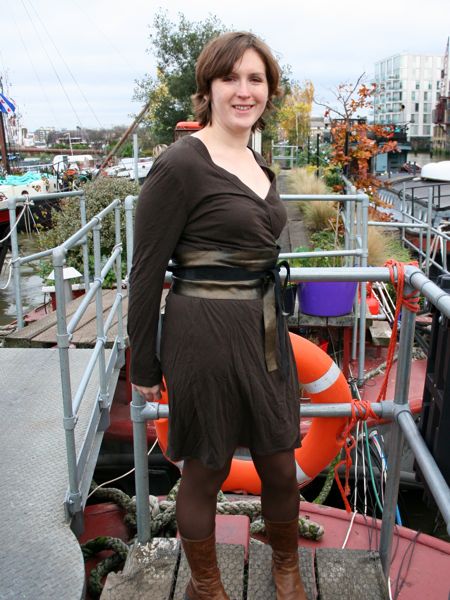
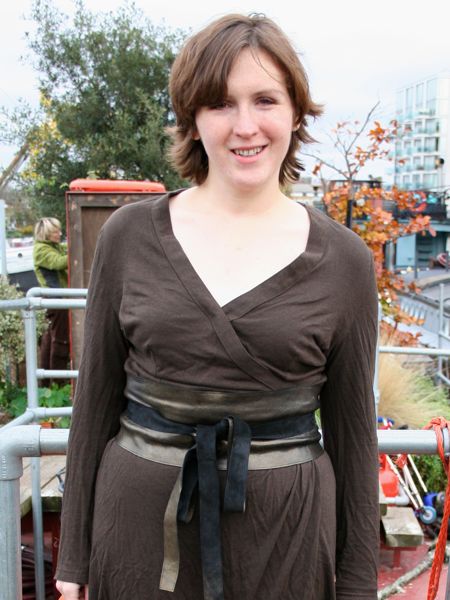
When I was in NYC on our honeymoon, I went a bit mental in Global Leathers and I found this awesome bronze leather with a black suede reverse in their scrap bin for $10! Steal! It was plenty big enough to make this obi belt, and I reckon I’ve got enough leftover to either make this again as a gift, or make a ruffled wristlet for me..

Cidell, Ghainskom, and Dawn have all already made BWOF 06/09 #151 ages ago and I’d kept this in the back of my mind since I saw theirs. This is the perfect pattern for this leather because not only do you get to see both sides, but it’s fully reversible, too!

Sookie Stackhouse Halloween costume

James and I are big fans of the fantastic and fantastically trashy HBO show “True Blood” so this Halloween we decided to dress up as Bon Temps’s psychic waitress Sookie Stackhouse and her 250 year old vampire boyfriend Bill Compton. James’s costume was considerably easier than mine (wear black, put on plastic fangs and fake blood, speak with Southern drawl), but thankfully mine didn’t involve too much effort this year either.

I wanted to recreate Sookie’s most recognisable outfit, the Merlotte’s bar uniform, which consists of black shorts, a tight white teeshirt with the green Merlotte’s logo, and a back bar apron.

As I’ve made clear before, I do not wear shorts. I own one pair that I bought when I was 18, and they don’t get worn outside the moorings. Whatever shorts I made here would be a one-time only garment, so I wanted to make them as simple and easy as possible. Since the October edition of Burda magazine was handy, I traced off #111 and then modified them to make them as simple as possible:

The Burda meets Armani coat – muslin FAIL

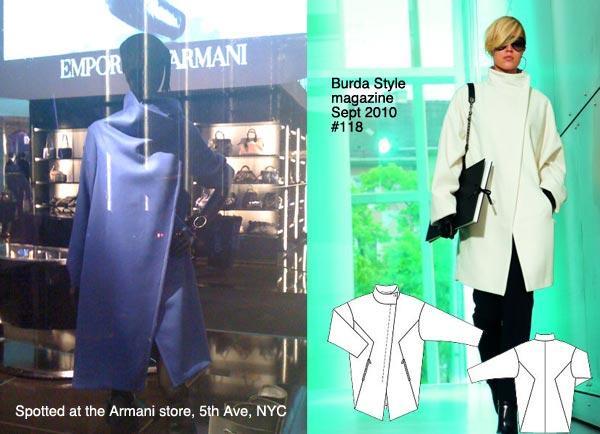
I absolutely LOVE the Burda magazine September 2010 issue. Loved it from the first second I saw the technical drawings, and now, several issues later, I’m still not seeing much that tops it. I literally have 11 or 12 must-sew patterns from it, and one of them is the Tall coat, #118.

As you recall, when I was in New York, I saw an eerily similar coat in the window of the Armani 5th Avenue store, and this sealed the deal – I must make this coat using my super thick, ex-Burberry dusty teal coating that’s been in my stash since last winter!

I don’t make muslins for a lot of things, but when the fabric is expensive, or can’t easily be resized (like leather), or if there’s a lot of work involved before a fitting can be made, then I’ll grumble and moan and make a muslin first rather than waste my nice fabric (and time!) and get any fitting issues out of the way first.

Let’s get down to the instructions first – Burda’s instructions aren’t too bad on this one EXCEPT for the zippered inseam pockets – they are absolutely nuts, and account for a good third of the instructions for the entire coat. But the instructions are besides the point, because if you jam your hands into your winter coat pockets when you walk like I do, you really don’t want metal zipper teeth digging in to the backs of your hands! So leaving off the zippers not only saves you time, but makes for a much more usable coat.

Navy blue riding trousers

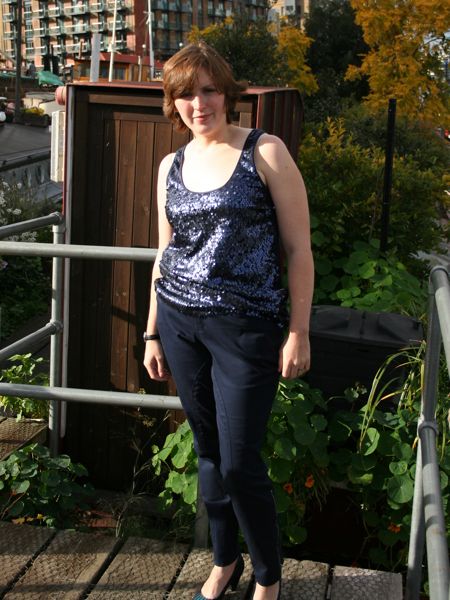
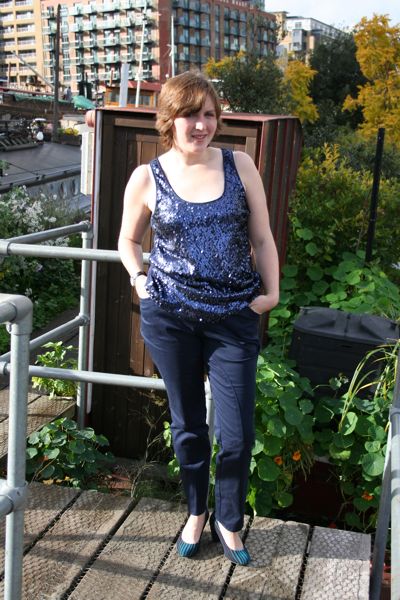
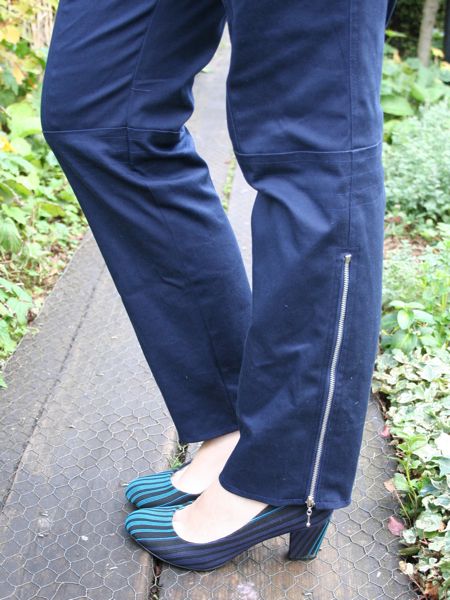
Jacquie made these trousers as part of her recent wardrobe collection (she’s “dingyadi” on PR) and I instantly knew I had to make them, too. Like her, I was put off by how skin-tight these looked on the Burda model in the magazine, but in real life, they fit really nicely! Unlike her, I left off the front patch pockets, though, as I figured there was enough going on everywhere else!

They’re from Burda magazine 08/2008 #120A:

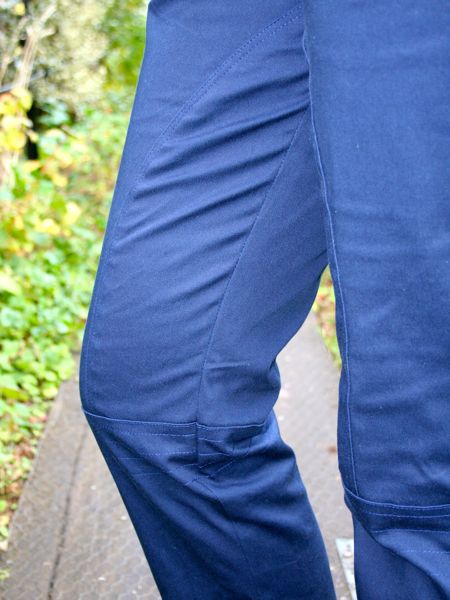
They’re great trousers, but there’s just so many freaking pieces, omg! And the topstitching!!

Take the front leg, for instance. On a normal pair of trousers, it’s one piece (maybe three if you have a pocket). On these, the front leg is comprised of three pieces before you even get into the pockets (so 6 in total for mine, or 9 if you chose View B with the added pouch pockets with the flap!). There’s a scooped pattern piece at the inner thigh in the front and back, and lots of horizontal topstitching across the knees in addition to topstitching pretty much every seam of the trousers, too.

DIY Wedding Gown – Fitting

Pip came round last night for dinner, drinks, holiday food exchange (French cheese from me and Greek nougat from her!), and her final fitting on her bridesmaid dress.

If you cast your mind back to April and May, her gown is the long, purple, silk jersey Gant exclusive design gown from the Sept 2008 Burda magazine.

I’d completed the gowns back in May, but I left off the tiny covered buttons on the cummerbund and finishing the hem until closer to the day so that they wouldn’t have to worry about gaining or losing a few pounds, or deciding on different shoes before now!

Happily, Pip’s gown fits her perfectly, with minimal overlap at the cummerbund, and really her hem was just about perfect with her chosen heels. But then we realised that if she switched to her comfort flip-flops on the dancefloor, the hem would drag, so I’m going to pull up the hem by an inch.

Then Pip wanted to see me in my gown, and since I hadn’t tried it on since the skirt was attached, I felt it was a good idea. But even though I was capable of wrestling into the boned bodice before, it was proving impossible (and more than a little claustrophobic) with the attached skirt. It was apparent that I had to remove the brass bar at the top of the zipper to allow the top to fully open and give me extra room to squeeze into the gown. I’d thought I might have to, but I kept it in until now since it wasn’t a problem. So now I’ll just need to add one or more hook and eyes to the top of the zipper to keep it all in place.

How to sew a narrow bias edge

I had a busy yet productive weekend – not only did I finish my Colette Patterns Beignet skirt, but I also made the Patrones 292 sleeveless bias cowl top, too! I didn’t have enough time for a photoshoot over the weekend, but I did remember to finally document my favourite way of finishing the edges of thin blouses like the cowl top so I can finally share this with you.

This technique is great for necklines and armscyes on sleeveless tops, and is my preferred way to finish any kind of blousey, lightweight fabrics like silk satins and the viscose (rayon) you see here. You get a thin, finished edge that looks good inside and out with a minimum of fuss, and you don’t have that awkward problem of facings flipping out or anything, either. As long as you’re okay with a small amount of topstitching on the right side, this is the technique for you…

So before we begin, sew one of your seams so you’ve got a C-shape. If you’re finishing a neckline, this means you sew one of the shoulder seams. I’m finishing the armscye of a sleeveless blouse here, so in this case I’m sewing both shoulder seams, leaving the side seams free.

Step 1


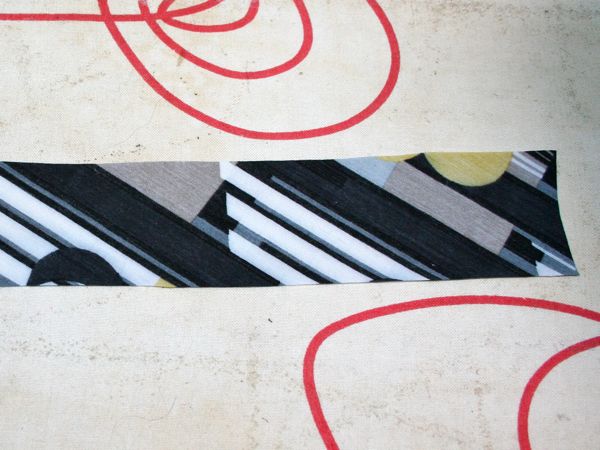
Cut out a bias strip that’s the length of your opening edge, plus a few centimetres just to be sure. For the width, I prefer a finished facing of just 1cm, so my width here is 1cm + (2× 1.5cm seam allowances) = 4cm.

Bridesmaids dresses – finished!

Both bridesmaids dresses for my September wedding are now finished! Since I’m sewing both of these plus my own gown, I stipulated that these had to be knit so that I could sew them early and my girls could feel free to gain or lose a few pounds without too much last-minute alterations hassle.

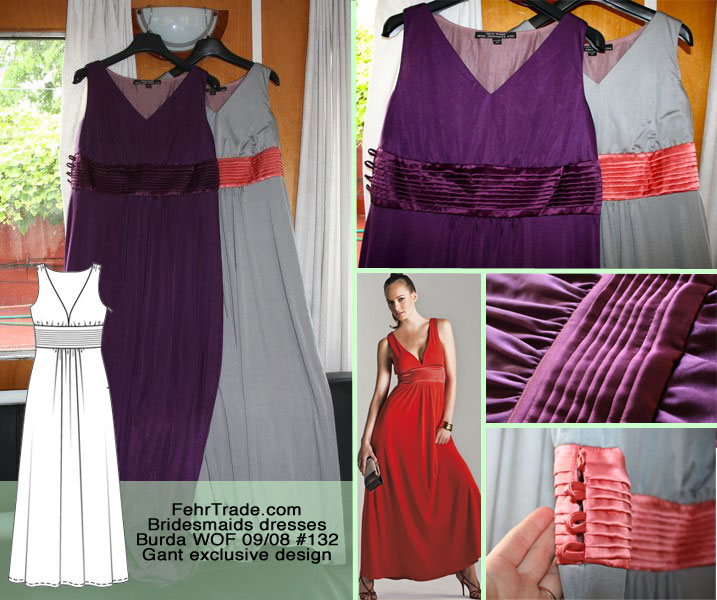
To refresh your memory, the three of us chose the Gant exclusive design dress from the Sept 08 Burda magazine:

The previous posts about these dresses spanned over a year (from our pre-illness, original wedding date), so to help you find them, here’s a handy list:

  1. Choosing the pattern
  2. Going fabric shopping and choosing their colours
  3. Tackling those pleated cummerbunds
  4. Finishing the first dress

Here are both dresses together, so you can see how nicely their colours will go together on the day: