Blog

In hindsight…

We had a super cold winter here this year, and I’m so glad I took all the extra […]

The LMB draped dress – muslin

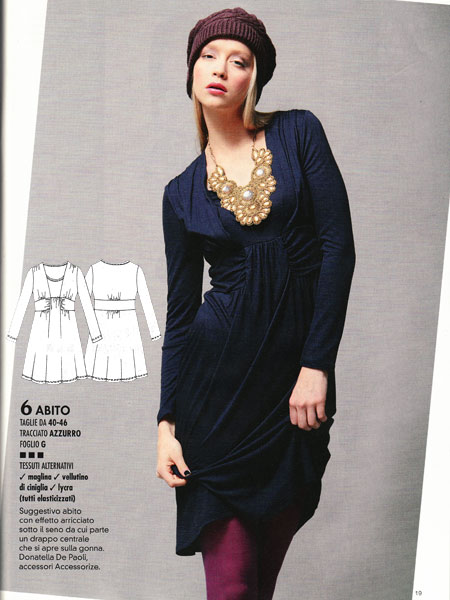
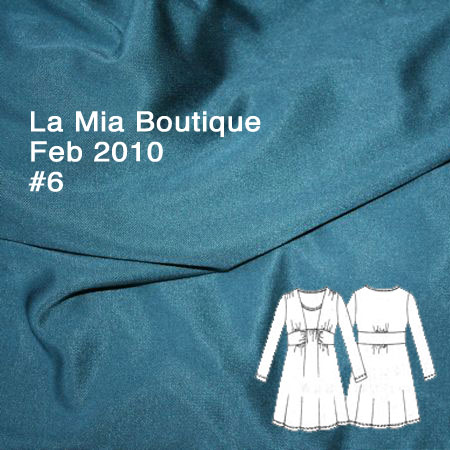
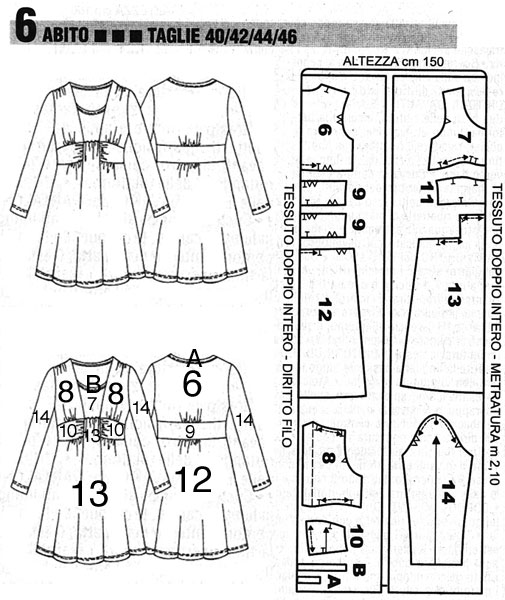
As good as my word, I sewed up a muslin for my birthday dress (next week, birthday fans!), which will be the draped jersey dress from the Feb 2010 La Mia Boutique magazine, #6:

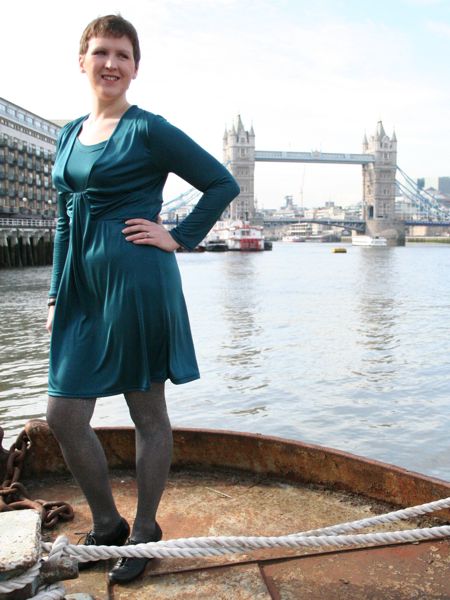
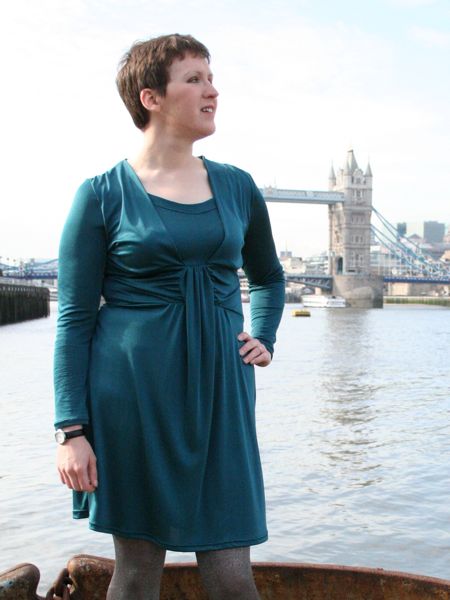
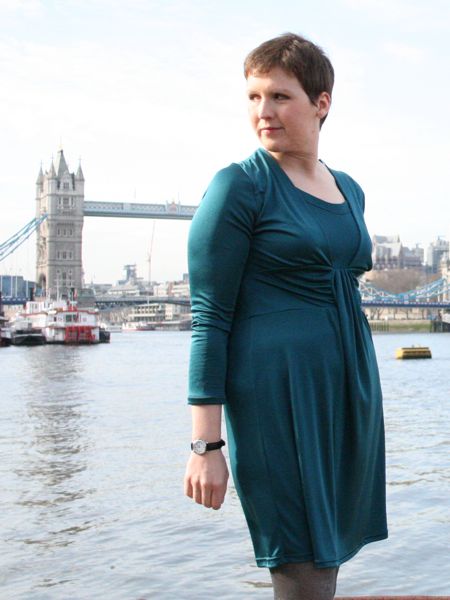
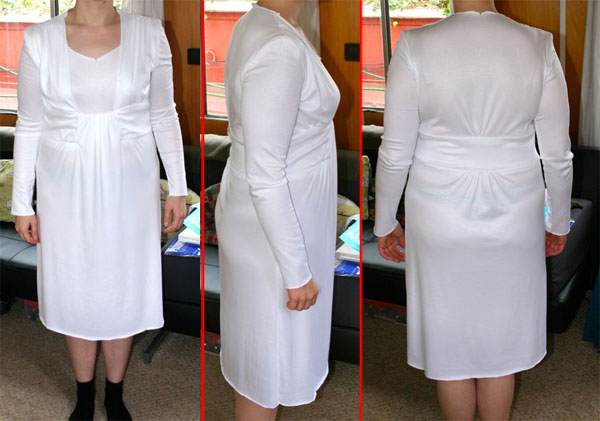
I sewed up the muslin in a viscose jersey, chosen for its very similar draping to silk jersey (with the bridesmaids’ dresses also in silk jersey, I bought TONS of this!), but it is pretty thin and see-through so it’s really only ever going to be good for muslins. After sewing a size 44 in the turtleneck and finding it quite roomy, I decided to go with a 44 here, too, even though I should be a 46 according to their size charts. This is sewn up exactly as per their paper pattern, with no alterations.

Here’s the front, side, and back views of the muslin:

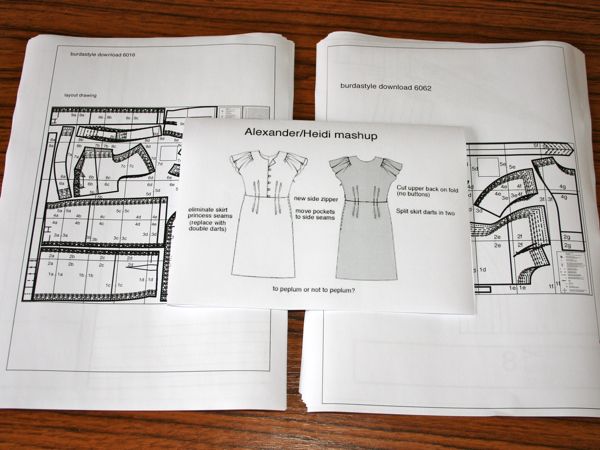
Mentally sewing the LMB draped dress

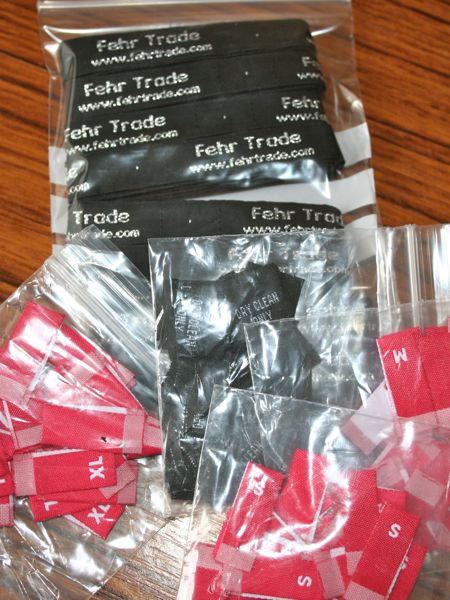
I’ve gotten as far as I can on my secret other project while I wait for supplies (mostly new labels – can you believe I’ve sewn through the last lot of 120-odd Fehr Trade labels in the past two years??), so I cut out my muslin pieces for my birthday dress. If you’ve got a good memory, it’s this luuuurrrrrvely draped number from the Feb 2010 La Mia Boutique magazine, #6:

What I normally do for foreign language patterns (La Mia Boutique is in Italian) is look at the pieces and get a brief order of construction in my head. Usually I work from the top down, starting with assembling the front bodice pieces then join to the back at the shoulders, then finish the neckline, then if it’s a knit, attach the sleeves at the armscye and sew up the side seams, or if it’s a woven, do the side seams first them attach the sleeve in the round. After sewing for a while, you begin to see that most pattern instructions have you sew things in roughly the same order, so you can just do those here to suit this particular pattern.

But for more complicated patterns like this one, I like to sit down with a pen and paper and mentally go through the whole process, visualising how the different pieces interact and the pros and cons of doing which seams in which order (like “if I do this first, is it going to make it awkward to serge that?”). It’s a great mental exercise in spatial thinking, and one of the most pleasurable aspects of sewing for me.

And it means I don’t have to type in every single word of the foreign instructions and figure out what the translator’s trying to tell me (sewing terms are not the best translated! )!

So since I was writing these out anyway, I thought my order of construction might help others who were eyeing up this pattern.

The nude sheath dress

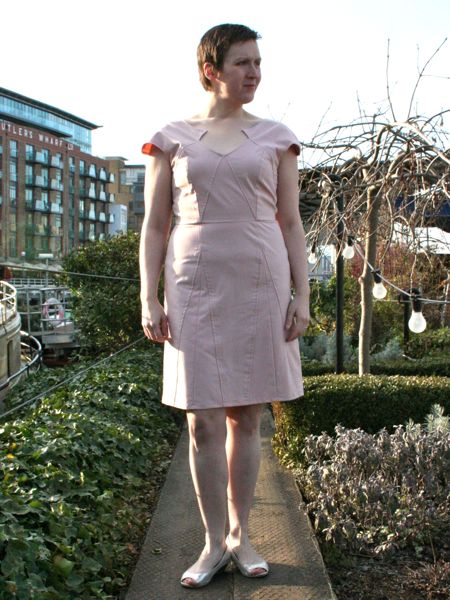
I like to keep up with fashion, but I definitely pick my trends to follow, leaving the totally unsuitable ones to the wayside (anything involving shorts or capris, I’m looking at you!). But the catwalk looks for SS/10 are just so full of lovely pale nude colours that I just couldn’t resist. I mean, Celine are the source of it all (say UK Vogue, anyway), but you know a trend is here to stay when the high street gets involved, with even Zara hyping up nudes and neutrals for spring!

And need I remind you that neutrals were big at the Oscars, too!

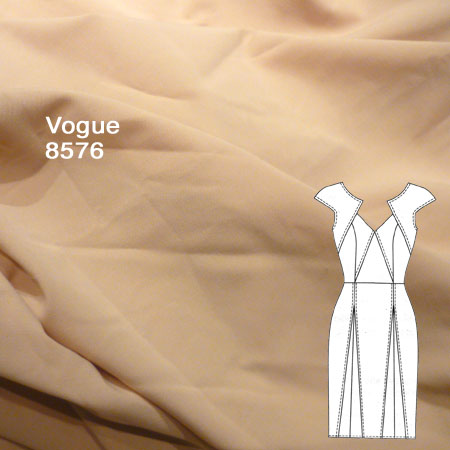
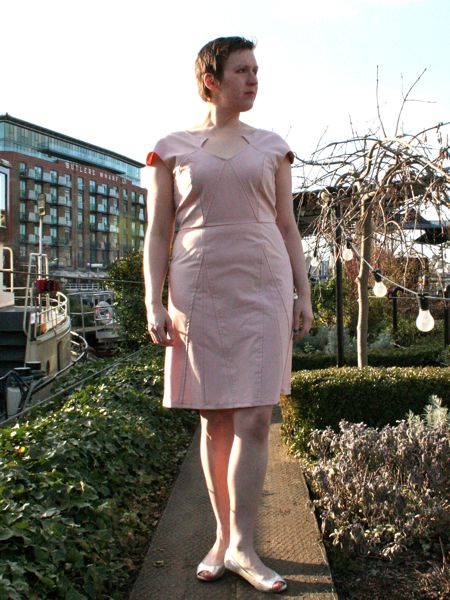
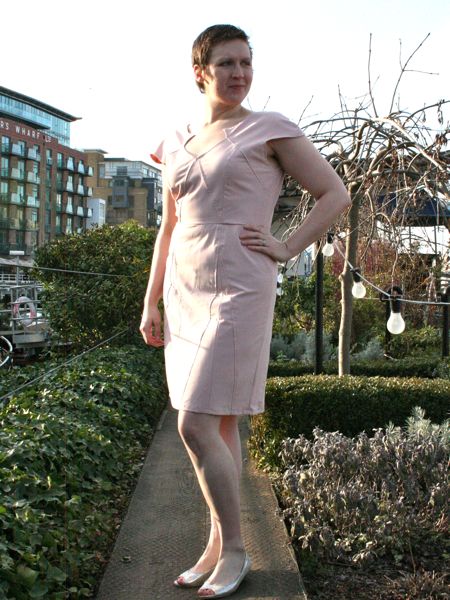
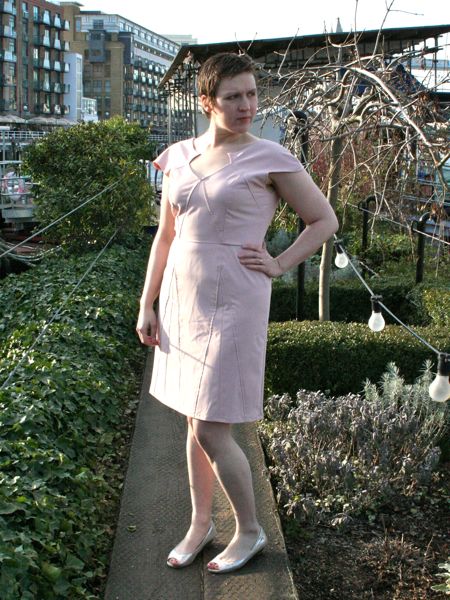
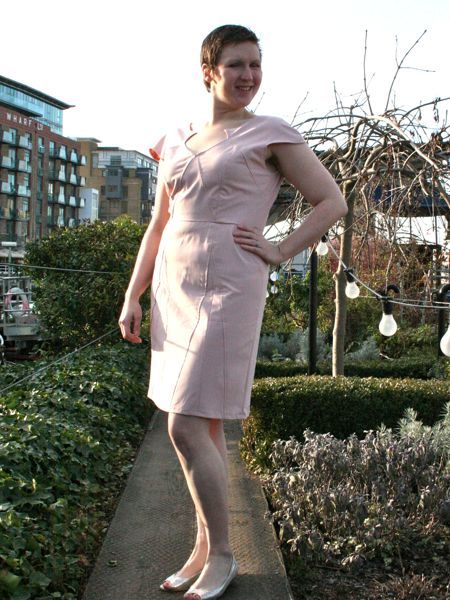
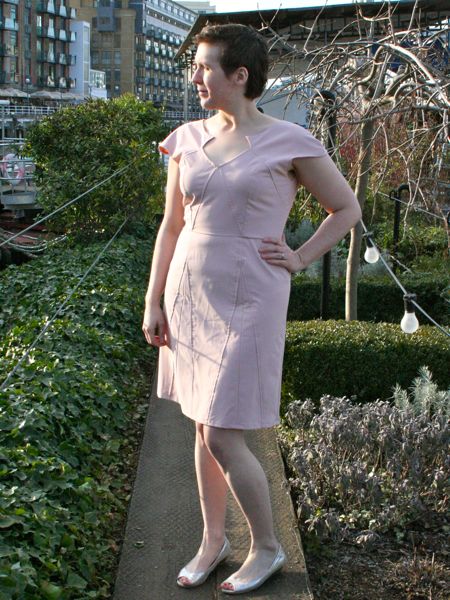
So when I saw some nude, pale pink poly/viscose stretch suiting in one of Totally Fabrics‘ fantastic sales, I knew it was time for climb aboard the hype train and ride this one all the way through to warm weather. I ultimately decided on the Divine Details sheath dress (Vogue 8576) for its great neckline and pleasing geometric seamlines.

I did make up a muslin for this dress but the fit was pretty much perfect straight off the pattern paper so I jumped in and ended up with my very own catwalk look!

I won!

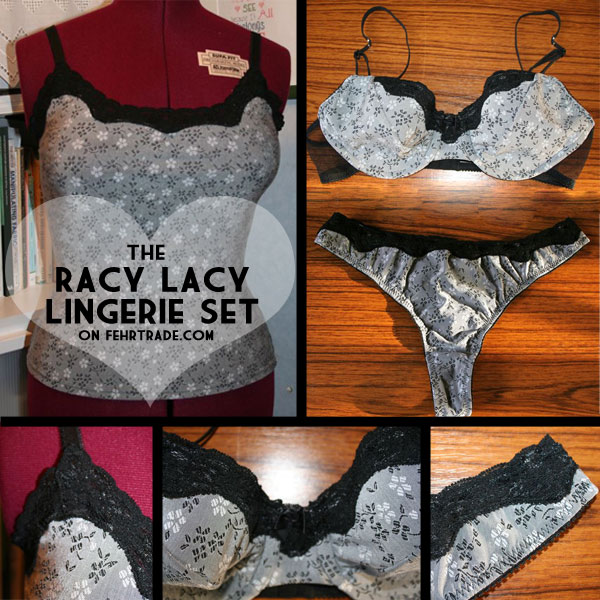
Wow! I’ve been entering Pattern Review contests for years and never even come close to winning, but I’ve won first place in the first ever Lingerie Contest!

Lingerie Contest Medium

Thank you all SO much for voting for my Racy Lacy Lingerie set, I’m so touched that it inspired so many of you to sew up some lingerie of your own.

And special thanks go to Sigrid, who inspired me to start sewing lingerie, and also gifted me the gorgeous kit that turned into the winning entry!

The forecast

On Saturday I took a trip out to Goldhawk Road with neighbour Helen with a strict list on my iPhone and an even stricter budget! My brain and eyes start to glaze over whenever I enter a fabric store so I have to come prepared with a list now to keep myself focused.

My list was mostly pretty boring – lots of linings (I got a few metres of a silk/cotton woven mix in both black and white for underlining some thin dress fabrics, and finally got some stretchy nylon tricot to line my Vogue sheath and test it for bridesmaid dress lining suitability) plus very cheap but very drapey viscose knit for birthday and bridesmaids dress muslins. The only real fun on my list was some luscious silk jersey for my birthday dress and a nice knit to make James’s sister a dress, and well, both ended up being silk jersey!

As they were cutting my dark turquoise silk jersey, the lady at Classic Textiles warned me their silk jersey will be going up in price to £18/m (once the current £16/m bolts are gone). And Fabric World across the street have black silk jersey (only black) for £10/m as a one-off right now, too. Consider yourself warned, Londoners!

So since I’ve already got the fabrics and the patterns paired, here they are for your visualisation (though they’re not quite the next things in my queue, I’ve got to juggle some muslins and draping in there first) –

Nude sheath dress in progress

I’ve been working on the partner to my grey tweed jacket, Vogue 8576 in a nude, pale pink poly/viscose stretch suiting I bought from Totally Fabrics during one of their fantastic sales.

I usually detest tracing Vogue patterns since their tissue paper is so flimsy, utterly enormous and so unwieldy to work with, but this one was surprisingly small since there’s only one view so no need for tons of extraneous pieces. Still not as easy as tracing KnipMode’s compact newsprint, for instance, but not enough to put me off sewing Vogue for months on end like it did previously!

The overall shape of this dress is quite simple, but it’s cut up into a ton of triangles and curves that can be tricky to visualise. So my first step was to lay them all out and see how they went together (seam allowances are included here so they don’t line up nicely like I’m used to though).

La Mia Boutique turtleneck

Before I tackle the Vogue sheath dress that will marry happily with my tweed jacket, I made a quick diversion in the form of a simple wintry knit top from the February 2010 La Mia Boutique magazine:

It’s a classic turtleneck pattern with a little bit of neckline gathering at the centre front, so there were only four pieces to trace (front, back, sleeve, and collar) and it was ridiculously quick to sew on the overlocker/serger and coverstitch. We’re talking a single evening in between preparing dinner here, folks!

Turning to the back…

Silver tweed skirt

You’ve seen the jacket, and a peek of the skirt as part of the suit, but now it’s the skirt’s time in the spotlight!

(Dutch readers – who is Odette Simons, anyway? Dutch celebrity? Fashion designer? Stylist? She’s appearing in most issues these days and it’s bugging me…)

I just loved the shape of the yoke and pockets on skirt #7 from the January 2010 KnipMode. Essentially they’ve just drawn a bunch of lines onto an A-line skirt pattern which you then cut apart to be the wide yoke, the main skirt body, the pocket backing, and the pocket facing. All that pattern piece reusing means you actually only end up tracing 3 pattern pieces (front, back, and pocket) because you cut up the pieces as you go along. So the top of the skirt back pattern gets cut off for the facing, the skirt front gets cut apart for the yoke, the pocket back, and the facing, etc.

Silver tweed jacket

It’s time now to turn our attention to the upper half of this silver tweed Planned Partnership, the little boxy cropped jacket (#18) from Patrones 272:

You saw the jacket as part of a classy suit, but how does it work with jeans?, I hear you ask.

As it turns out, even better!

I actually prefer this jacket hanging open instead of buttoned up (which is why I left off the button loop at the very top of the collar stand and the small button hidden under the collar that the pattern suggested).